Canfield Solitaire, the old casino game
The casino game - Beat the 13-card reserve if you can.How to Play Canfield Solitaire
In a nutshell: The casino game - Beat the 13-card reserve if you can. You play with 1 deck (52 cards), it's rated hard, casino-born, and casinos paid out above 10 foundation cards.
Born in Richard Canfield's 1890s Saratoga casino, where gamblers bought the deck for $50 and earned $5 per card they could foundation. A 13-card reserve feeds four tableau piles, foundations start from a random rank and build up with wrap-around. Legendarily stingy - And compulsive. The casino origin is baked into how the game feels: the thirteen-card reserve behaves like a penalty box that you fight to empty, and the wrap-around foundations mean the climb is rarely a straightforward Ace-to-King run. Most deals leave you short of a full clear, which is exactly why the house profited, and why the game keeps players coming back for one more attempt. With unlimited redeals you always feel one clever line away from beating the odds.
Canfield at a glance
| Goal | Build all four foundations up by suit, 13 cards each, starting from the dealt base rank and wrapping from King to Ace. |
|---|---|
| Decks used | 1 standard 52-card deck - 52 cards in play |
| Difficulty | Hard, casino-born |
| Chance of winning | Casinos paid out above 10 foundation cards |
| Family | Classic |
Step by step
Goal
Build all four foundations up by suit, 13 cards each, starting from the dealt base rank and wrapping from King to Ace.
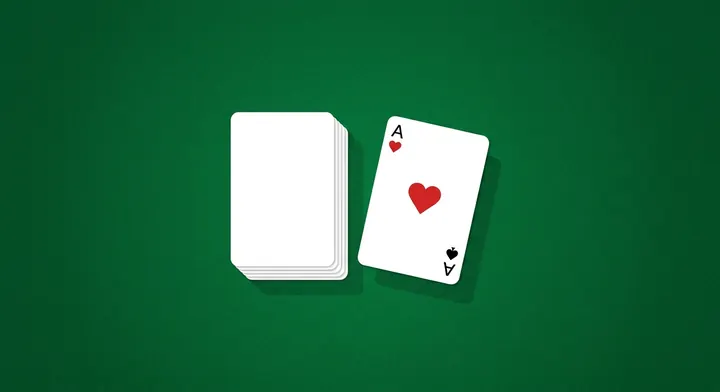
Reserve
Thirteen cards sit face down with the top one live. The reserve auto-fills empty tableau piles.
Foundations
The first card dealt sets the base rank for all four foundations (e.g. base 7: build 7, 8, 9 … K, A … 6).
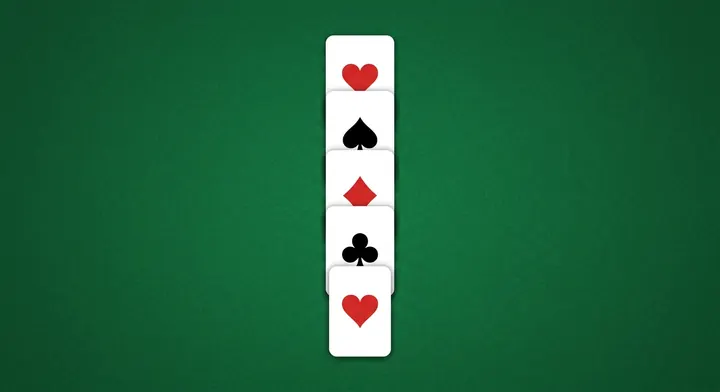
Tableau
Four piles build down in alternating colors with rank wrap-around; full piles move as a unit.
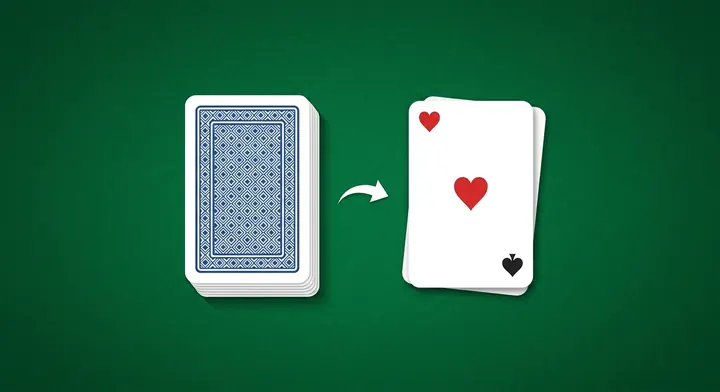
Stock
Deal three cards at a time to the waste, unlimited redeals.
History of Canfield
Canfield is named for Richard A. Canfield, the American gambler who ran a famous casino in Saratoga Springs, New York, in the 1890s. According to the well-worn story, Canfield sold a customer a full deck for fifty dollars and then paid out five dollars for every card the player managed to move to the foundations, plus a bonus for a complete clear.
Because the game is so difficult - Most players foundationed only five or six cards on average - The arrangement was a reliable moneymaker for the house, and the game became associated with Canfield's name in the United States. In Britain the same game is traditionally called Demon, a nod to its fiendish difficulty.
The game's structure reflects its gambling origins: a thirteen-card reserve feeds four tableau piles, the foundations begin from a randomly dealt base rank and build upward with wrap-around from King back to Ace, and the stock is dealt three cards at a time. Canfield spread through patience anthologies and, later, computer solitaire collections, where its low win rate and compulsive "just one more deal" pull have kept it a favorite among players who enjoy a genuine uphill fight.
How to Win Canfield: Strategy
💡 Top tip: The reserve is the game - Every reserve card released is pure profit. Prefer any move that frees one.
Winning tips, in order of importance
- Because ranks wrap, an empty-looking foundation ladder can still climb: think modulo 13, not A-to-K.
- Keep tableau piles short; long alternating chains rarely pay off before the deal locks.
- Track the three-card stock cycle like Klondike Turn 3 - Its order is fixed between redeals.
- Don't block the rank just below a foundation base; those cards are the last to leave and clog the tableau.
- Cycle the stock a full time before forcing marginal plays, since unlimited redeals mean you lose nothing by first learning what the waste will offer.
- Prefer refilling an emptied tableau pile from the reserve rather than the stock, because draining the reserve is the only path to a win.
Advanced tactics for Canfield
- Treat freeing reserve cards as your top priority on every turn, since in the game's casino origins each released reserve card was literally worth money and it remains the key to progress.
- Because foundations wrap from King back to Ace, think of the build as modular arithmetic rather than a straight Ace-to-King climb; a low base rank still needs its high cards eventually.
- Keep tableau piles short and flexible, as long alternating chains tend to lock up before they pay off in Canfield's cramped four-pile layout.
- Track the fixed order of the three-card stock cycle the way you would in Klondike Turn 3, so you know which cards will resurface on later passes.
- Avoid burying the rank just below each foundation's base, because those cards leave the tableau last and will clog your piles if trapped.
- Fill an emptied tableau pile from the reserve rather than the stock whenever possible, since draining the reserve is what actually advances the game.
- Since redeals are unlimited, don't force marginal plays early; cycle the stock to gather information before committing to an irreversible tableau structure.
Common Canfield mistakes to avoid
- Neglecting the reserve pile - clearing the reserve is the real battle, so feed its cards into play before they get stuck.
- Forgetting foundations start on a random rank, not the Ace - build up from that base rank and wrap past King to the Ace.
- Filling an empty column from the tableau - refill it from the reserve first to keep draining that pile.
- Cycling the stock carelessly - the three-card draw repeats, so plan which card you need before you deal through again.
Canfield Variations
Demon (British name)
The identical game under its traditional British name, so called for its punishing difficulty; rules and layout are exactly the same as Canfield.
Rainbow / Storehouse (Thirteen Up)
Variants that change the reserve or draw rules - Storehouse fixes the foundation base at 2 and builds the tableau in suit - Altering difficulty.
Chameleon
A smaller Canfield relative with three tableau piles and a shorter reserve, where tableau builds down regardless of suit for a faster game.
Draw-one Canfield
Dealing the stock one card at a time instead of three greatly increases the win rate, a common softening of the classic rules.
Selective Canfield
A modern option that lets you choose the foundation base rank at the start, giving the player more control over an otherwise luck-heavy opening.
Canfield FAQ
Why do foundations start from a random card in Canfield?
The first card dealt to a foundation sets the base rank for all four. Builds wrap around from King back to Ace until each pile holds 13 cards.
What is the Canfield casino story?
In the 1890s, Richard Canfield's Saratoga Springs casino sold the deck for $50; players won $5 for every card they placed on the foundations. Averages ran 5–6 cards - The house did very well.
What does the reserve do?
It's a 13-card penalty box: the top card is always playable, and the reserve automatically refills any empty tableau pile until it's exhausted.
Is Canfield the same as Demon?
Yes - The game is called Demon in Britain. Same rules, same reputation for cruelty.
How often can you win Canfield?
Canfield is notoriously stingy. Even with skilled play, only a minority of deals can be fully cleared, and the game was designed as a casino gamble precisely because most players placed only a handful of cards on the foundations before getting stuck.
How does the reserve work in Canfield?
Thirteen cards are stacked face down as a reserve, with only the top card live and playable at any moment. Whenever a tableau pile empties, the reserve automatically refills it, so working through the reserve is both your main obstacle and your primary measure of progress.
What does draw-three mean in Canfield?
The stock is dealt three cards at a time to the waste, and only the top card of each group of three is immediately playable, much like Klondike Turn 3. Because redeals are unlimited, the fixed order of the stock repeats, so you can plan which cards will resurface on later passes.
Why do the foundations wrap around in Canfield?
The first card dealt to a foundation sets the base rank for all four foundations, and they build upward from there, looping from King back to Ace until each pile holds thirteen cards. So a base of 9 would build 9, 10, Jack, Queen, King, Ace, 2, and so on up to 8.
What is the best strategy for Canfield?
Prioritize any move that releases a reserve card, since emptying the reserve is how you win, and keep your tableau piles short and flexible rather than building long chains that lock up. Track the repeating three-card stock order and avoid burying the cards just below each foundation's base rank.
How many cards are in the Canfield reserve?
Thirteen cards form the reserve, stacked face down with only the top card exposed and playable. Working that pile down is the central challenge, and the reserve also automatically refills any tableau pile that becomes empty.
What is the goal of Canfield Solitaire?
The goal is to build all four foundations to thirteen cards each, in suit, starting from the base rank set by the first foundation card and wrapping from King back to Ace. Clearing enough cards to finish all four is rare, which is exactly why the casino version was profitable.
Why is Canfield also called Demon?
Demon is simply the traditional British name for the same game, earned by its fiendish difficulty. The rules, layout, and low win rate are identical whether you call it Canfield or Demon.
Canfield guides & strategy
- Are all solitaire games winnable? The odds
- The complete solitaire glossary
- More solitaire strategy guides on the blog
Still have a question about Canfield Solitaire? Browse the full solitaire FAQ, look up a term like classic or hard, casino-born in the solitaire glossary, or compare Canfield with the other games in the rules for every solitaire.
Last updated .