Pyramid Solitaire: pair cards that make 13
Pair cards that add to 13 and dismantle the pyramid.How to Play Pyramid Solitaire
In a nutshell: Pair cards that add to 13 and dismantle the pyramid. You play with 1 deck (52 cards), it's rated quick & tactical, and ~20% winnable in strict rules.
Pyramid deals 28 cards into a seven-row pyramid. Remove pairs of exposed cards whose ranks sum to 13 - Kings fly off alone. A quick, addictive arithmetic puzzle where each removed pair uncovers the row above. Unlike building games such as Klondike or FreeCell, Pyramid is about demolition: you are tearing a structure down rather than assembling one, and each card you remove exposes the cards it was resting on. That gives the game a satisfying cascade rhythm, but it also means a single mismanaged pair can seal off cards you still needed, which is why Pyramid rewards planning your removals a few steps ahead.
Pyramid at a glance
| Goal | Clear all 28 pyramid cards by removing pairs that total 13. |
|---|---|
| Decks used | 1 standard 52-card deck - 52 cards in play |
| Difficulty | Quick & tactical |
| Chance of winning | ~20% winnable in strict rules |
| Family | Matching |
Step by step
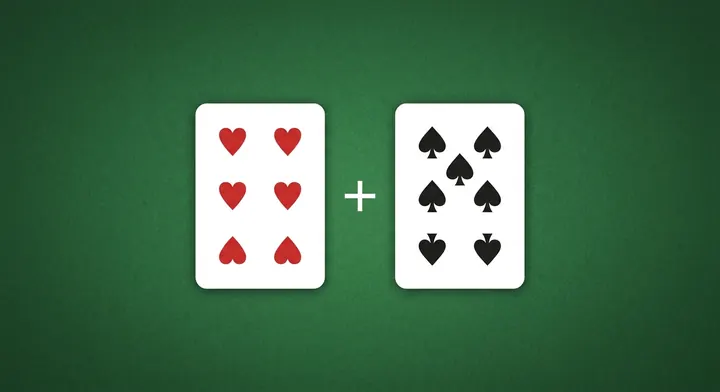
Goal
Clear all 28 pyramid cards by removing pairs that total 13.
Values
Ace = 1, Jack = 11, Queen = 12, King = 13. Pairs: A+Q, 2+J, 3+10, 4+9, 5+8, 6+7. Kings are removed alone.
Exposed cards
A pyramid card is playable only when no cards overlap it from below.
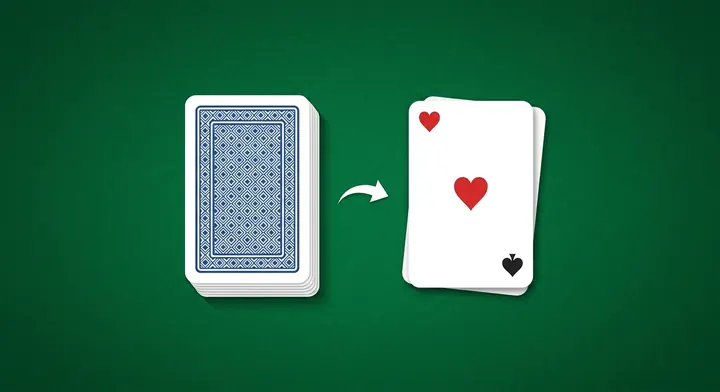
Stock & waste
Flip stock cards one at a time; pair the top waste card with pyramid cards (or the next stock flip).
Redeals
You may cycle the stock twice more after the first pass.
History of Pyramid
Pyramid belongs to the family of "adding" or "13" patiences, whose defining idea is removing cards in combinations that reach a target number. Such games have circulated in patience collections since at least the nineteenth century, when card-value arithmetic puzzles were a popular parlor pastime.
The distinctive triangular layout of twenty-eight overlapping cards gives the game its name and its Egyptian-tomb visual theme, which publishers have leaned into ever since. Unlike building games such as Klondike, Pyramid asks the player to demolish a structure rather than assemble one, making it feel closer to a matching or clearing puzzle.
Pyramid's modern familiarity owes much to its inclusion in countless computer and mobile solitaire collections, where its short playing time and clear rules made it a natural companion to Klondike and FreeCell. It is notorious for a low win rate under strict rules, which is why so many digital versions add generous redeals or the option to pair the top waste card with the top stock card to keep games winnable and fun.
How to Win Pyramid: Strategy
💡 Top tip: Scan for Kings first - They're free removals that never need a partner.
Winning tips, in order of importance
- Count the four copies of each rank: if two 6s are stuck under the two 7s' positions, the deal may be dead - Plan around pair scarcity.
- Clear the pyramid symmetrically; a lopsided pyramid strands cards under one wing.
- Don't waste a pair between stock and waste if one of those ranks is still needed to unlock the pyramid.
- Prefer pyramid+pyramid pairs over pyramid+waste pairs - They remove two blockers at once.
- Hold a useful waste card rather than pairing it immediately if the same rank is about to unlock a deeper pyramid card on your next flip.
- Plan your removals so the two bottom corners of the pyramid come down together, keeping the whole base from collapsing lopsidedly.
Advanced tactics for Pyramid
- Before making any pair, check whether removing it will orphan a card higher in the pyramid whose only partner you are about to use up.
- Because each rank has only four copies, keep a running count of how many of a needed rank remain available in the stock versus locked in the pyramid.
- Prefer pairs that remove two pyramid cards over pairs that use a waste card, since clearing the structure itself is what wins the game.
- Time your stock recycles: hold a promising waste card back rather than pairing it early if it is the key to unlocking a deeper pyramid blocker.
- Try to keep both lower corners of the pyramid progressing together, because a wing that lags behind can trap the cards above it.
- When a King is buried and cannot yet be removed, prioritize the pairs that will expose it, since a stuck King blocks everything resting on it.
- Look one stock flip ahead when possible; knowing the next card lets you decide whether to spend the current waste card now or wait.
Common Pyramid mistakes to avoid
- Spending a stock or waste card whose rank still unlocks a buried pyramid card - hold it back until the blocker is exposed.
- Clearing one wing of the pyramid faster than the other - a lopsided base strands the cards resting above the slow side.
- Forgetting to grab exposed Kings - a King removes alone with no partner, so take that free clear the moment it opens up.
- Preferring pyramid-plus-waste pairs over pyramid-plus-pyramid pairs - pairing two pyramid cards removes two blockers at once.
Pyramid Variations
Relaxed Pyramid
Allows the top card of the waste and the top card of the stock to be paired together, dramatically raising the win rate over strict rules.
Number of redeals
Rule sets differ on how many times you may recycle the stock, from zero (hardest) to unlimited; the classic allows two extra passes.
Giza
A Pyramid relative that deals extra reserve columns instead of a stock, giving more open cards to pair and a higher chance of clearing.
Tut's Tomb / Pyramid Golf
Scoring variants that reward speed and combos rather than simply clearing the board, popular in casual mobile apps.
Two-pyramid or double Pyramid
Uses two decks and two pyramids for a longer game, keeping the sum-to-thirteen rule while adding more blockers to untangle.
Pyramid FAQ
What do I do with Kings in Pyramid?
Kings count as 13 on their own, so click an exposed King to remove it immediately - No partner card needed.
Can I pair two cards in the pyramid?
Yes, any two exposed pyramid cards summing to 13 can be paired, and it's usually the strongest move available.
Is every Pyramid deal winnable?
No - Pyramid has one of the lower win rates in solitaire. With strict rules only roughly a fifth of deals can be cleared, which is why efficient pairing matters.
What happens when the stock runs out?
You can recycle the waste back into the stock up to two times. After the third pass, only pyramid and waste pairs remain.
Does suit matter in Pyramid?
No. Only the numeric value of each card matters, because the goal is to make pairs that sum to thirteen. Suit and color are irrelevant, which keeps the game a pure arithmetic exercise.
Which cards add up to 13 in Pyramid?
The pairs are Ace with Queen, 2 with Jack, 3 with 10, 4 with 9, 5 with 8, and 6 with 7. Kings equal 13 on their own and are removed singly. Memorizing these six pairs makes scanning the board for legal moves almost instant.
Why is Pyramid so hard to win?
Under strict rules only about a fifth of deals can be fully cleared, because cards get locked when their only partners are buried or already discarded. Relaxed rule sets that allow pairing the top stock and waste cards, or that grant extra redeals, raise the win rate considerably.
Can I pair the stock and waste cards together?
It depends on the rules. Strict Pyramid only lets you pair a stock or waste card with an exposed pyramid card, while many relaxed versions also let you pair the top stock card directly with the top waste card, which makes far more deals winnable.
What is the fastest way to spot moves in Pyramid?
Scan the exposed row for any King first, since Kings never need a partner, then look for two exposed pyramid cards that sum to thirteen, and only then consider pairing with the waste. Prioritizing pyramid-to-pyramid pairs removes two blockers at once and speeds up the whole board.
How many cards are in the Pyramid layout?
Twenty-eight cards are dealt into a seven-row triangle, from one card at the apex to seven along the base. The remaining twenty-four cards form the stock and waste that you draw from to find partners for the pyramid cards.
What is a card considered exposed in Pyramid?
A pyramid card is exposed, and therefore playable, only when no other card overlaps it from below. As you remove the two cards resting on top of a lower card, that lower card becomes free, which is how the pyramid gradually unpeels from the bottom up.
Can Pyramid Solitaire always be won?
No. Pyramid has one of the lowest win rates in solitaire under strict rules, because cards frequently get locked when their only partners are buried or already gone. Choosing generous rule settings and playing efficiently is the best way to improve your odds.
Pyramid guides & strategy
- Are all solitaire games winnable? The odds
- The complete solitaire glossary
- More solitaire strategy guides on the blog
Still have a question about Pyramid Solitaire? Browse the full solitaire FAQ, look up a term like matching or quick & tactical in the solitaire glossary, or compare Pyramid with the other games in the rules for every solitaire.
Last updated .