Russian Solitaire, Yukon built in suit
Yukon's brutal sibling - Builds must follow suit.How to Play Russian Solitaire
In a nutshell: Yukon's brutal sibling - Builds must follow suit. You play with 1 deck (52 cards), it's rated very hard, and under 10% of deals fall.
Russian Solitaire is Yukon with one merciless change: tableau builds must be the same suit instead of alternating colors. The same free-wheeling group moves, a fraction of the legal landings. Widely considered one of the toughest single-deck games worth playing. That one rule change is dramatic. Where Yukon gives every card two possible landing spots, one of each color, Russian gives each card exactly one - The next card up in its own suit - So the number of legal moves collapses and a single blocked card can freeze an entire line of play. Many enthusiasts play it with undo as an open puzzle, savoring the long, careful sequencing that a rare win demands rather than expecting to clear most deals.
Russian at a glance
| Goal | Build the four foundations from Ace to King by suit. |
|---|---|
| Decks used | 1 standard 52-card deck - 52 cards in play |
| Difficulty | Very hard |
| Chance of winning | Under 10% of deals fall |
| Family | Klondike Family |
Step by step
Goal
Build the four foundations from Ace to King by suit.
Deal
Identical to Yukon: seven columns, 21 face-down cards, everything else face up from the start.
Moves
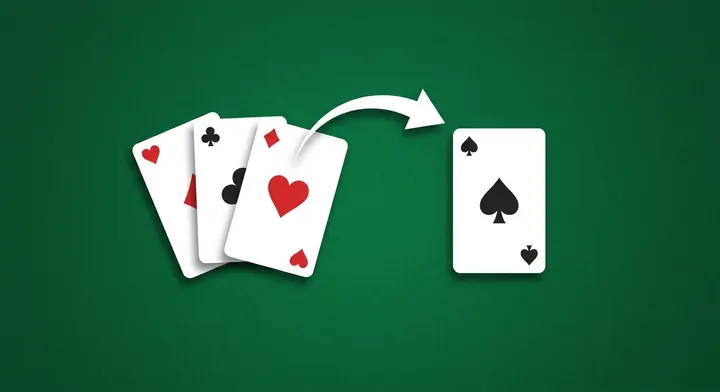
Move any face-up card plus everything on top of it - But it must land on the next-higher card of the same suit.
Empty columns
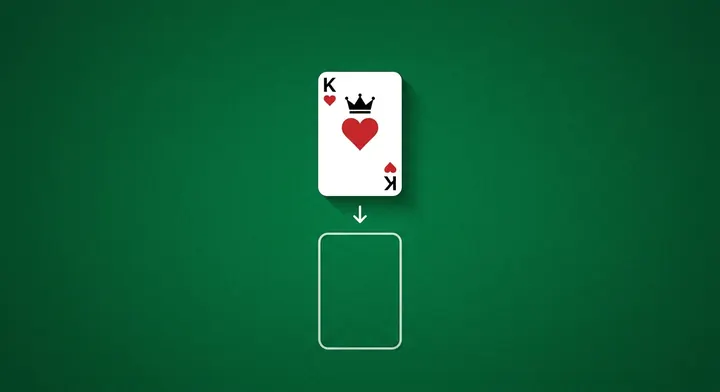
Kings only.
Flipping
Exposed face-down cards flip automatically.
History of Russian
Russian Solitaire is a direct offshoot of Yukon, and its history is inseparable from that game. It keeps Yukon's entire structure - All fifty-two cards dealt across seven columns, no stock, and the ability to move any face-up card together with everything piled on top of it - And changes a single rule.
That one change is severe. Instead of building the tableau down in alternating colors, Russian Solitaire requires building down in the same suit. Because every card therefore has just one legal landing spot rather than two, the number of available moves at any moment collapses, and long stretches of the game can hinge on freeing a single blocked card.
The game circulated through the same twentieth-century patience literature and later software collections that popularized Yukon, and it earned a reputation as one of the toughest single-deck solitaires worth attempting. Estimated win rates sit in the low double digits even with strong play, so many enthusiasts treat it as an undo-assisted puzzle, savoring each hard-won victory as a small feat of sequencing.
How to Win Russian: Strategy
💡 Top tip: Each card has exactly one legal landing spot (the next card up in its suit) - Trace those chains before touching anything.
Winning tips, in order of importance
- Unburying face-down cards is even more valuable than in Yukon; you have fewer ways to recover from a block.
- Foundation aggressively - Unlike alternating-color games, tableau cards rarely serve as landing pads for other suits.
- If two cards of a suit chain are stacked in the wrong order in one column, plan the crane-lift to fix it early.
- Expect to lose most deals. Winnable ones reward long, careful sequencing - Take your time.
- Delay committing to a big group move until you have confirmed every card in the chain has a same-suit home waiting, since a stalled relay is very hard to reverse.
- Treat undo as a planning tool: try a promising line, and if it dead-ends, back it out and use what you learned to find the one workable order.
Advanced tactics for Russian
- Map each suit's descending chain across the whole board before moving anything, because with only one legal landing per card a single misstep can freeze the game.
- Prioritize unburying face-down cards even more aggressively than in Yukon, since same-suit rules leave you far fewer ways to recover from a block.
- Foundation cards more readily than in alternating-color games; tableau cards seldom serve as useful landing pads for other suits, so parking value is low.
- When two cards of the same suit are stacked in the wrong order in one column, plan the crane-lift that repairs the sequence early, while spare space still exists.
- Keep a King with a clear route to an empty column in mind, because Kings anchor the only same-suit runs that can grow to full length.
- Sequence your moves to open the deepest columns first; once the board tightens, same-suit restrictions make late rescues nearly impossible.
- Accept that many deals are simply unwinnable and use undo to explore lines; the game rewards patient experimentation over speed.
Common Russian mistakes to avoid
- Playing it like Yukon - builds must follow suit here, so each card has only one legal landing spot, not two.
- Moving a group without a same-suit home - park a jumbled stack only where its bottom card lands legally in suit.
- Foundationing a card another column still needs in suit - one missing same-suit link can freeze a whole line of play.
- Leaving deep face-down cards for last - reach them while you still have flexible columns, before the board tightens up.
Russian Variations
Yukon
The parent game, identical except that it builds down in alternating colors instead of the same suit, which makes it dramatically easier and higher-scoring.
Alaska
A Russian-family variant that allows building up or down within a suit sequence, adding flexibility to the strict same-suit rule.
Moosehide
Builds down in any suit other than the card's own, a middle ground that is easier than Russian's same-suit rule but harder than Yukon's colors.
Relaxed Russian
Rule sets that let any card fill an empty column rather than only Kings, giving beginners a foothold in an otherwise brutal game.
Double Russian
A two-deck extension with more columns for players who want a longer same-suit challenge.
Russian FAQ
What's the difference between Russian and Yukon solitaire?
One rule: Russian builds down in the same suit, Yukon in alternating colors. That single change makes Russian several times harder.
How often can Russian Solitaire be won?
Estimates put winnable deals under 10–15% even with excellent play, making it one of the hardest popular solitaires.
Why play something so hard?
Because wins feel earned. Fans treat it like a puzzle: every victory is a story, and undo-assisted play turns it into a genuine brain-teaser.
Do groups need to be ordered to move?
No - Like Yukon, any face-up card moves with whatever sits on it, ordered or not.
Is there a stock in Russian Solitaire?
No. As in Yukon, all fifty-two cards are dealt to the tableau at the start with no stock or waste pile. Everything you will ever have is visible from move one, which makes careful early planning essential.
Why is Russian Solitaire so difficult?
The same-suit building rule means each card has just one legal place to land instead of two, so the tree of available moves is far narrower than in Yukon. A single card locked in the wrong spot can block a whole suit, and with no stock to bail you out, many deals simply cannot be won.
Should I use undo in Russian Solitaire?
Many players do, and it is a legitimate way to enjoy the game. Because winnable deals require long, precise sequences and dead ends are easy to stumble into, treating Russian as an undo-assisted puzzle lets you explore lines and learn the patterns without endless losses.
What is the difference between same-suit and alternating-color building?
In Yukon you build down in alternating colors, so a red 7 accepts either black 6, giving two options per card. In Russian you must build down in the same suit, so a 7 of hearts only accepts the 6 of hearts, roughly halving your legal moves and sharply raising the difficulty.
Can any card go on an empty column in Russian Solitaire?
No, only a King may fill an empty column, along with any cards stacked on it. Empty columns are therefore precious and hard to exploit, so plan carefully before you clear one out.
How many cards start face down in Russian Solitaire?
The deal is identical to Yukon: twenty-one of the fifty-two cards begin face down and the rest are face up from the start. All the difficulty comes from the same-suit building rule, not from hidden information.
What is the goal of Russian Solitaire?
The goal is the same as most solitaires: build the four foundations up from Ace to King, one per suit. Getting there is far harder because the tableau must be built down in suit, giving each card only a single legal landing spot.
Is Russian Solitaire the hardest solitaire game?
It is among the hardest single-deck games in common play, with estimated win rates in the low double digits even with strong play. Games like four-suit Spider are comparably brutal, but Russian's single legal landing per card makes it a byword for difficulty.
Russian guides & strategy
- Are all solitaire games winnable? The odds
- The complete solitaire glossary
- More solitaire strategy guides on the blog
Still have a question about Russian Solitaire? Browse the full solitaire FAQ, look up a term like klondike family or very hard in the solitaire glossary, or compare Russian with the other games in the rules for every solitaire.
Last updated .