Yukon Solitaire with no stock to lean on
Klondike's wild cousin - Move any face-up group, no stock.How to Play Yukon Solitaire
In a nutshell: Klondike's wild cousin - Move any face-up group, no stock. You play with 1 deck (52 cards), it's rated deep & thinky, and ~80% winnable with strong play.
Yukon deals all 52 cards at the start - No stock, no waste. You may move any face-up card together with everything stacked on top of it, ordered or not, as long as it lands on a card one rank higher of the opposite color. Chaotic-looking, deeply strategic. Because there is no stock and only twenty-one cards start face down, almost everything is on the table from the first move, and the freedom to relocate unordered groups gives you far more options than Klondike. That combination makes Yukon a favorite among players who feel Klondike leans too heavily on the luck of the deal: here, strong players win the large majority of games, and most losses come down to reading the board wrong rather than an unwinnable shuffle.
Yukon at a glance
| Goal | Build the four foundations from Ace to King by suit. |
|---|---|
| Decks used | 1 standard 52-card deck - 52 cards in play |
| Difficulty | Deep & thinky |
| Chance of winning | ~80% winnable with strong play |
| Family | Klondike Family |
Step by step
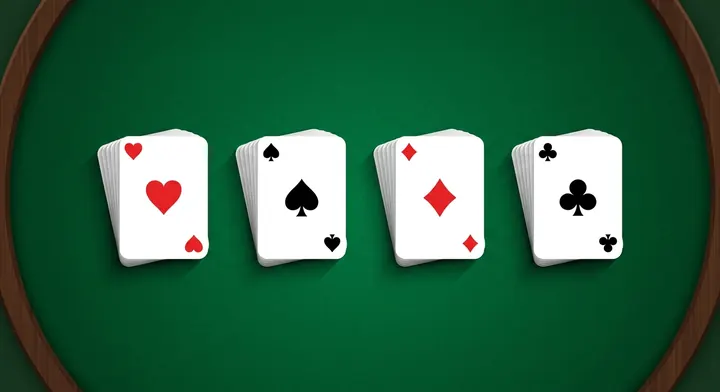
Goal
Build the four foundations from Ace to King by suit.
Deal
Seven columns; the first holds one card and the rest hold face-down cards topped by five face-up cards each. Every card is in play from move one.

Moves
Pick up any face-up card with all cards above it - The group doesn't need to be in order. The landing card must be one rank higher and the opposite color.
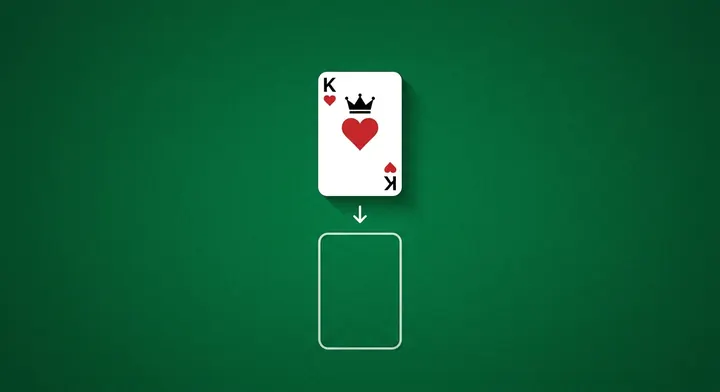
Empty columns
Only Kings (with their groups) may move to an empty column.

Flipping
Exposed face-down cards flip automatically.
History of Yukon
Yukon is a single-deck patience closely related to Klondike, and like Klondike its name evokes Canada's far north and the gold-rush era that made the Yukon famous. It is best understood as a bolder cousin of the world's most popular solitaire: same foundations, same alternating-color building, but a very different flow of play.
The defining twist is that Yukon has no stock. All fifty-two cards are dealt to seven columns at the outset, twenty-one of them face down, and the rest face up. Even more distinctively, a player may pick up any face-up card together with every card lying on top of it and move the whole group, whether or not those cards form an ordered sequence, as long as the bottom card lands legally.
Yukon spread through the same printed patience anthologies and later digital collections that carried Klondike, and it gained a following among players who found Klondike too dependent on the luck of the deal. With nearly all information visible and such flexible moves, Yukon rewards careful reading of the board, and strong players win a large majority of deals.
How to Win Yukon: Strategy
💡 Top tip: Face-down cards are the only hidden information - Every move that flips one is gold.
Winning tips, in order of importance
- Because groups needn't be ordered, deep 'crane lifts' can relocate whole messes at once - Look for them before single-card moves.
- Watch color parity: you need alternating colors on landing cards, so keep both red and black build targets alive.
- Uncover Aces and 2s early, but delay foundationing mid ranks you may need as landing pads.
- Empty a column only when you have a King ready - An empty column with no King is wasted tempo.
- Because groups need not be ordered to move, you can temporarily dump a jumbled stack on a legal card and re-sort it later, so plan those relays deliberately.
- Reach the deepest face-down cards while you still have flexible columns to work with, rather than waiting until the board tightens up.
Advanced tactics for Yukon
- Since you can move any face-up card with everything on top of it, look for large 'crane lifts' that relocate an entire messy pile in one move before considering single-card plays.
- Every move that flips a face-down card is precious because those twenty-one cards are the only hidden information in the game; prioritize them relentlessly.
- Maintain both a red and a black landing target as you build, so alternating-color moves never dead-end for lack of the right color.
- Uncover Aces and low cards early, but hold back mid-rank cards that other columns still need as landing pads before sending them to the foundations.
- Only empty a column when a King (with or without a following group) is ready to occupy it, since an empty column with no King wastes tempo.
- Because groups need not be ordered, you can temporarily park an out-of-sequence stack on a legal bottom card and re-sort it later - Plan those relays deliberately.
- Think about the final unburying order: reach the deepest face-down cards while you still have flexible columns, rather than after the board tightens up.
Common Yukon mistakes to avoid
- Making single-card moves when a group move exists - you can carry any face-up card with everything on top of it, so lift whole piles.
- Emptying a column with no King ready - only a King can fill the gap, so an empty column without one just wastes tempo.
- Letting one color of landing target vanish - you build in alternating colors, so keep both a red and a black target alive.
- Chasing foundations before flips - the twenty-one face-down cards are the only hidden information, so uncover them first.
Yukon Variations
Russian Solitaire
The best-known relative: identical deal and group moves, but the tableau must be built in the same suit instead of alternating colors, making it far harder.
Alaska
A Yukon variant in which the tableau builds either up or down (as well as by rank) within a suit or sequence, changing which moves are legal.
Moosehide
Plays like Yukon but requires building down in a different suit rather than alternating color, sitting in difficulty between Yukon and Russian.
Double Yukon
Uses two decks and additional columns for a longer game that keeps Yukon's no-stock, group-move character.
Relaxed Yukon
Rule sets that allow any card (not just a King) to fill an empty column, easing the game for beginners.
Yukon FAQ
How is Yukon different from Klondike?
There's no stock or waste - All 52 cards are dealt at the start - And you may move any face-up group even if it isn't in sequence, as long as the bottom card lands legally.
Do moved groups need to be in order?
No. Only the card you pick up matters for the landing rule; everything on top of it comes along for the ride, in whatever order it sits.
Is Yukon winnable more often than Klondike?
Yes - With all cards visible-ish (only 21 start face down) and flexible moves, strong players win the large majority of deals.
What goes on an empty column in Yukon?
Kings only, together with any pile of cards stacked on them.
Is there a stock or waste pile in Yukon?
No. Yukon deals all fifty-two cards to the tableau at the start, with no stock to draw from and no waste pile. Every card is on the board from the first move, which is what makes the game so open and strategic.
Can I move a group of cards that isn't in order?
Yes, and this is Yukon's signature rule. You may pick up any face-up card together with every card stacked on top of it, whether or not those cards form a sequence, as long as the bottom card of the group lands on a card one rank higher and of the opposite color.
Is Yukon harder than Klondike?
In some ways it is more forgiving, because there is no stock luck and nearly all cards are visible, so a large majority of deals are winnable with good play. It is harder to play well, though, since the freedom to move unordered groups gives you many more choices to weigh on every turn.
How do I win at Yukon Solitaire?
Make flipping face-down cards your top priority, look for large group moves that relocate whole messy piles at once, and keep both a red and a black landing target available so your alternating-color moves never dead-end. Empty a column only when you have a King ready to occupy it.
What can I place on an empty column in Yukon?
Only a King, though it may bring an entire stack of cards along with it. Because empty columns are scarce and can only be filled by Kings, you should avoid emptying one unless a King is ready to move in and put the space to use.
How many cards start face down in Yukon?
Twenty-one of the fifty-two cards begin face down, spread across the tableau, while the remaining thirty-one are face up from the start. That is much less hidden information than Klondike, which is one reason Yukon is winnable so much more often.
Where did the name Yukon come from?
Like Klondike, Yukon is named after Canada's northern gold-rush country, evoking the same frontier era. The two games are close relatives, so the shared geographic theme fits their family resemblance.
Do I build in alternating colors in Yukon?
Yes. The tableau builds down in alternating colors, exactly like Klondike, so a red card must land on a black card one rank higher, and vice versa. The difference is that you can carry an entire unordered stack along with the card you move.
Yukon guides & strategy
- Mastering Klondike-style strategy
- Are all solitaire games winnable? The odds
- More solitaire strategy guides on the blog
Still have a question about Yukon Solitaire? Browse the full solitaire FAQ, look up a term like klondike family or deep & thinky in the solitaire glossary, or compare Yukon with the other games in the rules for every solitaire.
Last updated .