Forty Thieves Solitaire with two full decks
Two decks, forty guards, one pass through the stock.How to Play Forty Thieves Solitaire
In a nutshell: Two decks, forty guards, one pass through the stock. You play with 2 decks (104 cards), it's rated expert, and ~10% for skilled players.
Forty face-up cards guard ten tableau columns; behind them, a 64-card stock you may pass through exactly once. Builds are down in suit, one card at a time. Napoleon supposedly played it in exile - A game with plenty of time to think suits a game this demanding. Everything about Forty Thieves is austere: cards move only one at a time, the tableau builds down in suit rather than by color, and the stock is turned just once with no second chances. That combination gives it one of the lower win rates in classic solitaire and a well-earned reputation as an expert's game, where empty columns are your engine and a single card buried in the waste at the wrong moment can decide the whole deal.
Forty Thieves at a glance
| Goal | Build all eight foundations (two per suit) from Ace to King. |
|---|---|
| Decks used | 2 standard 52-card decks - 104 cards in play |
| Difficulty | Expert |
| Chance of winning | ~10% for skilled players |
| Family | Two-Deck |
Step by step
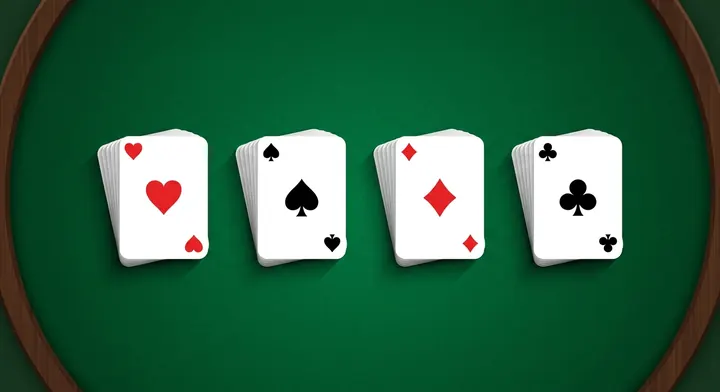
Goal
Build all eight foundations (two per suit) from Ace to King.
Deal
Ten columns of four cards, all face up.
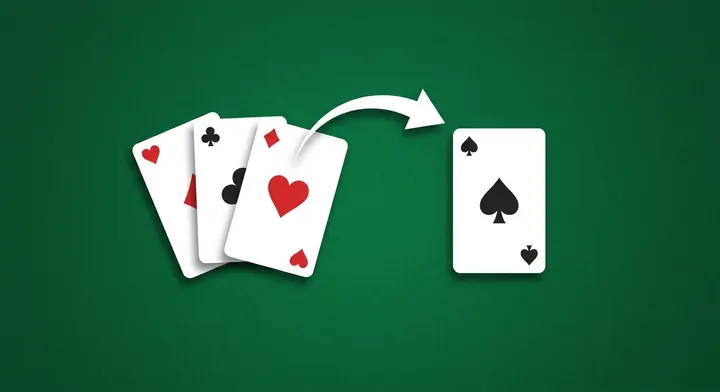
Moves
Tableau builds down in the same suit, strictly one card at a time. Any single card may fill an empty column.
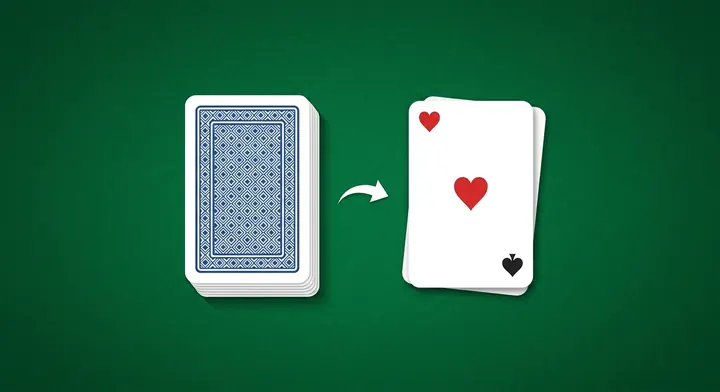
Stock
Flip one card at a time to the waste - One pass only, no redeals.
Waste
The top waste card is always playable, but everything under it is trapped until you free it.
History of Forty Thieves
Forty Thieves is one of the classic two-deck patiences and is also widely known as Napoleon at Saint Helena, a name tied to the enduring legend that the exiled emperor played it during his final years on the remote island. Historians treat the Napoleon connection with skepticism, but the romantic story has followed the game for well over a century.
The name "Forty Thieves" comes from the deal itself: forty cards laid face up in ten columns of four, standing guard like the thieves of the Ali Baba tale over the treasure locked in the stock behind them. Everything about the game is austere - Builds go down in suit, cards move only one at a time, and the stock is turned just once with no redeals.
Documented in Victorian-era patience collections and carried into virtually every modern solitaire suite, Forty Thieves earned a reputation as an expert's game with a low win rate. Its long history and demanding rules have also spawned an unusually large family of easing variants, as designers repeatedly tried to make its uncompromising structure a little more forgiving.
How to Win Forty Thieves: Strategy
💡 Top tip: One pass through the stock means every skipped card is gone - Before each flip, make every tableau move you'll ever want.
Winning tips, in order of importance
- Empty columns are the engine: use them to relay cards between columns and to unload the waste.
- Avoid burying low cards of a suit under high cards of the same suit - Same-suit builds make those blocks permanent.
- Send cards to foundations evenly across suits; racing one suit up strands its twins in the second deck.
- The waste is a stack, not a fan - Plan the order you'll need cards back out.
- Hold off on your first stock flip until the opening tableau is fully worked, because everything you can arrange for free now costs you nothing from your single pass.
- Build toward emptying a column early; the first empty column transforms an almost frozen game into a workable one by giving you somewhere to relay cards.
Advanced tactics for Forty Thieves
- Because the stock is turned only once, wring every useful tableau move out of the board before each flip; a card skipped in the waste is gone for good.
- Guard empty columns as your primary engine - Use them to relay cards between columns and to unload buried cards from the waste.
- Avoid stacking a low card of a suit on top of a higher card of the same suit, since same-suit-only building turns such a placement into a permanent block.
- Advance all eight foundations at a roughly even pace; racing one suit up strands its duplicate in the second deck and leaves you unable to place the twin.
- Remember the waste is a last-in, first-out stack, not a fan - Plan the order in which you will need cards back out before you commit them to it.
- Delay foundationing a card if it still serves as a same-suit landing spot that lets you dismantle a troublesome column.
- Since single-card moves are slow, plan multi-step relays (through an empty column) in full before starting them, so you don't strand a partial sequence.
Common Forty Thieves mistakes to avoid
- Moving only single cards is the rule here, so plan each relocation individually rather than expecting to shift a whole run.
- Sending cards to the foundation too eagerly - with same-suit tableau building you often need those cards as landing spots.
- Emptying columns without a plan - open columns are scarce and precious, so fill them only to unlock a needed card.
- Cycling the stock without thinking - you get a single pass, so read the board and use every tableau play before you deal.
Forty Thieves Variations
Josephine
Identical to Forty Thieves except that ordered same-suit sequences may be moved as a group, which dramatically improves the win rate.
Streets / Rank and File
Variants that build the tableau in alternating colors instead of the same suit, greatly easing movement while keeping the two-deck layout.
Limited / Deauville
Forty Thieves relatives that adjust the number of columns or cards dealt (for example twelve columns), tuning the game's difficulty.
Number of stock passes
Softer versions allow a second or unlimited passes through the stock rather than the classic single deal, a common concession to its brutal difficulty.
Napoleon at Saint Helena
Simply the traditional alternative name for the standard game, reflecting the legend of Napoleon playing it in exile.
Forty Thieves FAQ
Why is Forty Thieves so hard?
Single-card moves, same-suit builds and a one-pass stock leave almost no room for error. Every card buried in the waste at the wrong moment can be fatal.
How many foundations does it have?
Eight - With two decks you build each suit twice, Ace to King, 104 cards in total.
Can I move sequences in Forty Thieves?
No, only one card at a time. Moving an in-suit run of five cards takes five moves and usually an empty column to relay through.
What's the connection to Napoleon?
Legend says Napoleon played it (and gave it its other name, 'Napoleon at Saint Helena') during his exile. Historians are skeptical; players enjoy the story anyway.
How many cards and columns does Forty Thieves use?
Two full decks, 104 cards in all. Forty of them are dealt face up into ten columns of four (the 'forty thieves'), and the remaining sixty-four form a stock you may pass through only once.
Why can I only move one card at a time?
That is the classic Forty Thieves rule, and it is a large part of what makes the game so hard. To relocate a sequence of several cards you must move them one by one, usually parking them in an empty column, so empty columns become your most valuable resource for shuffling cards around.
How do I win Forty Thieves more often?
Make every useful tableau move before each stock flip, since the single pass means a skipped card is gone for good. Guard empty columns for relaying cards, advance all eight foundations evenly so you don't strand a suit's duplicate, and avoid burying low cards of a suit under higher cards of the same suit.
What are the easier versions of Forty Thieves?
Josephine allows moving ordered same-suit groups instead of single cards, while Streets and Rank and File build the tableau in alternating colors. Both changes dramatically improve the win rate and are good starting points before tackling the strict original.
Is Forty Thieves the same as Napoleon at Saint Helena?
Yes, they are the same game. The name Napoleon at Saint Helena comes from the legend that the exiled emperor played it, while Forty Thieves refers to the forty cards dealt face up to guard the stock. Historians doubt the Napoleon story, but the name has stuck.
How is the tableau built in Forty Thieves?
The tableau builds down in the same suit, one card at a time, so a 9 of clubs only accepts the 8 of clubs. This same-suit rule, combined with single-card moves, is what makes Forty Thieves so much harder than alternating-color games like Klondike.
What is the goal of Forty Thieves?
The goal is to build all eight foundations up from Ace to King, two for each suit since the game uses two decks. Completing all 104 cards is a genuine achievement given the strict building and single stock pass.
How many chances do I get with the stock in Forty Thieves?
Just one. You turn the stock a single card at a time with no redeals, so once a card is passed and buried in the waste it may be very hard to recover. That single pass is a major reason skilled players still win only around one deal in ten.
Forty Thieves guides & strategy
- Are all solitaire games winnable? The odds
- The complete solitaire glossary
- More solitaire strategy guides on the blog
Still have a question about Forty Thieves Solitaire? Browse the full solitaire FAQ, look up a term like two-deck or expert in the solitaire glossary, or compare Forty Thieves with the other games in the rules for every solitaire.
Last updated .